Eco-Friendly Hotels in Morocco: The Rise of Sustainable Construction
The Moroccan hospitality industry is embracing a green revolution. Across cities and desert towns, a new wave of eco-friendly hotels is reshaping tourism through sustainable construction and green building practices. Driven by eco-conscious travelers and global climate goals, this trend is no longer optional — it’s becoming the standard.
Why Eco-Friendly Hotels Are on the Rise in Morocco
With tourism being a major economic pillar, Morocco is aligning its hospitality sector with international sustainability standards. From energy-efficient riads in Marrakech to solar-powered lodges in the Atlas Mountains, hotels are going green without compromising on charm or comfort.
Key Elements of Sustainable Construction in Morocco
Sustainable construction in Morocco blends ancient techniques with modern efficiency. Here’s how:
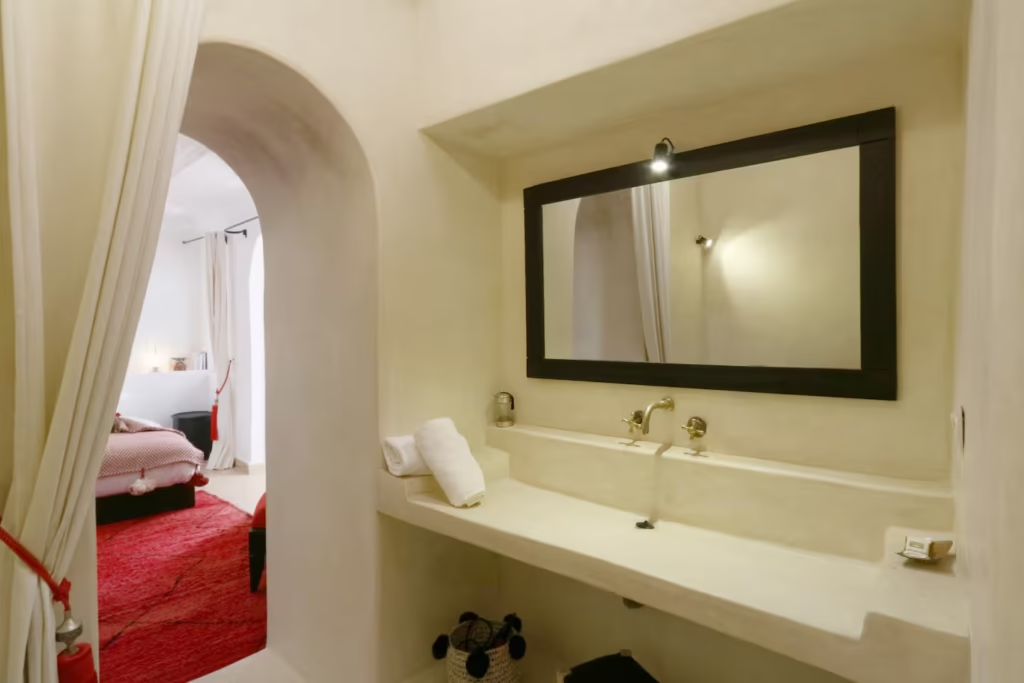
🧱 Local Materials: Rammed earth, tadelakt, and zellige tiles reduce carbon footprint
🌞 Renewable Energy: Solar panels are increasingly used in desert lodges and guesthouses
💧 Water Efficiency: Rainwater harvesting and low-flow plumbing are now standard in new eco-retreats
Case Study: A Green Guesthouse in Chefchaouen
A formerly conventional guesthouse in Chefchaouen transformed into a certified eco-friendly hotel using:
Insulated walls made from recycled cork
On-site composting for food waste
Rooftop solar hot water system
Organic, locally sourced furnishings
Results? Energy costs were cut by 40%, and the property saw a 60% increase in eco-tourist bookings.
Green Building Certifications Making Waves
In Morocco, green building certifications such as LEED, EDGE, and HQE are gaining traction among hotel developers who want international recognition for their sustainability efforts.
These certifications assess:
Energy use
Water efficiency
Environmental impact of materials
Indoor environmental quality
Eco-Friendly Hotels: A Competitive Advantage
Modern travelers, especially millennials and Gen Z, actively seek out eco-conscious brands. Offering sustainable features not only protects the environment but also:
Enhances guest loyalty
Improves online reviews
Justifies higher nightly rates
Challenges in Building Eco-Friendly Hotels in Morocco
Despite progress, the path isn’t without obstacles:
Limited availability of certified green materials
Higher initial construction costs
Lack of specialized contractors in rural areas
Still, the long-term savings and brand value make green investments worthwhile — especially for boutique hotels and resorts.
Looking Ahead: Morocco’s Vision for Green Hospitality
The Moroccan government has launched several incentives to support eco-friendly construction, especially in the hospitality and tourism sectors. These include tax reliefs, training programs, and subsidies for renewable energy integration.
This national vision aligns with Morocco’s National Sustainable Development Strategy 2030, which aims to decarbonize sectors like real estate and tourism.
Conclusion: Eco-Friendly Hotels Are the Future of Moroccan Tourism
The rise of eco-friendly hotels is more than a trend — it’s a response to global responsibility and guest demand. From the medinas to the mountains, Moroccan hoteliers are proving that luxury and sustainability can thrive together.
If you’re developing or renovating a property in Morocco, now is the time to embrace sustainable construction and create experiences that care for both your guests and the planet.
Hotel Furnishing: How to Choose the Right Partner for Your Boutique Hotel
Furnishing a boutique hotel is more than just buying chairs and beds — it’s about crafting an experience. The right hotel furnishing partner can help you balance style, functionality, and the soul of your brand.
Whether you’re launching a new property or undergoing turnkey construction, this guide walks you through the essentials of choosing a furnishing partner that delivers custom solutions — especially in a design-rich region like Morocco.
Understand the Role of Hotel Furnishing in Guest Experience
The moment a guest enters your hotel, the interiors tell a story. High-quality furniture that reflects your hotel’s identity can:
Boost guest satisfaction
Increase positive reviews
Encourage longer stays and return visits
If you’re investing in custom interiors, it’s vital to work with a partner who understands hospitality trends and durability standards.
Look for Expertise in Bespoke Furniture (Especially in Morocco)
Bespoke furniture in Morocco is a global design trend — known for handcrafted woodwork, artisan metal finishes, and textiles with centuries-old traditions.
When selecting a partner:
Ask about local sourcing
Look at past projects in riads or boutique hotels
Ensure they combine tradition with modern functionality
Choose a Partner Experienced in Turnkey Construction Projects
If your boutique hotel is being built from scratch or undergoing major turnkey construction, your furnishing partner should collaborate seamlessly with architects, builders, and project managers.
This ensures:
Accurate furniture dimensions
Installation during the right construction phase
No surprise costs or delays
Demand Customization Without Compromising Durability
Your hotel isn’t a showroom — it’s a high-traffic space. That means custom interiors must also be:
Easy to clean
Resistant to wear and tear
Designed for both beauty and practicality
Ask for material samples, review fabric warranties, and ensure fire-retardant compliance where required.
Evaluate Their Portfolio and Hospitality References
A great furnishing partner will have:
Past work in the hotel industry
Case studies with ROI or review improvements
Testimonials from boutique or luxury properties
Don’t settle for residential designers — hotel furnishing is a completely different field.
Sustainability and Local Craftsmanship
Modern hotel guests appreciate eco-conscious choices. Look for a furnishing provider who:
Uses sustainable woods or recycled materials
Partners with local Moroccan artisans
Reduces transport emissions by sourcing regionally
Budgeting and Logistics: Don’t Forget the Backend
The right partner helps you plan beyond the catalog. They’ll assist with:
Freight and customs (especially for Moroccan exports)
On-site installation and assembly
Post-installation support or replacements
Hotel Furnishing Is a Design + Business Decision Choosing the right hotel furnishing partner is one of the most critical decisions in the hotel development process. It’s not just about aesthetics — it’s about guest comfort, operational efficiency, and long-term value. In Morocco, where bespoke furniture and rich traditions define the market, you’ll find incredible opportunities — if you choose the right collaborators.
Hospitality Business in Morocco: Complete Guide to Launching a Guesthouse (2025)
If you’ve ever dreamed of running a boutique retreat or riad, 2025 is a great year to start a hospitality business in Morocco. With tourism rebounding and travelers craving local, authentic stays, guesthouses are in high demand — especially in culturally rich cities like Marrakech, Chefchaouen, and Essaouira.
In this guide, we’ll walk you through everything you need to know to open a guesthouse in Morocco, from finding land and managing construction to securing licenses, hiring staff, and marketing your dream stay.
Step 1: Planning & Construction – The Startup Phase
Choose the Right Location
Popular guesthouse destinations include:
Marrakech Medina – traditional riads with high ROI
Fes or Chefchaouen – heritage architecture, budget travelers
Coastal towns like Essaouira – eco-tourism and surf lodges
Atlas Mountains or Ouarzazate – nature retreats
Construction & Renovation Guide
Your guesthouse needs to match both Moroccan style and guest comfort. Here’s what to consider:
Tadelakt bathrooms, zellige tiles, and wooden moucharabieh for authenticity
Work with local professionals familiar with Moroccan architecture
Follow the construction startup guide to stay on time and on budget
Step 2: Legal Requirements to Open a Guesthouse in Morocco
To operate legally, you must:
Register your business with the Centre Régional d’Investissement (CRI)
Obtain a classification from the Ministry of Tourism
Pass local inspections for safety, hygiene, and accessibility
Set up your accounting and tax structure properly
Tip: Hire a Moroccan legal advisor to help navigate the paperwork efficiently.
Step 3: Operations – Hiring & Daily Management
Staff & Guest Experience
Key roles you’ll need:
Housekeepers and front desk
Cook or kitchen assistant
Maintenance or handyman
Guest services/concierge
Use guest feedback to constantly improve. In the hospitality business, service is what drives repeat bookings.
Step 4: Branding, Marketing & Online Presence
Build a Strong Brand
Your guesthouse should stand out with a unique story, visuals, and value proposition. Are you:
A luxury riad in the medina?
A sustainable surf stay by the sea?
A traditional mountain retreat?
Go Digital
To succeed in the hospitality business, you need to:
List on Booking.com, Airbnb, and local travel sites
Create a professional website with booking functionality
Use social media to build a community around your brand
Step 5: Budgeting and ROI Expectations
Startup costs vary based on location, size, and renovation level, but expect:
Construction/renovation: €60,000–€200,000
Furniture & branding: €10,000–€30,000
Permits and legal: €2,000–€5,000
You can break even within 2–4 years with good marketing and high-season pricing strategies.
Final Thoughts: Build More Than a Guesthouse — Build a Story
Starting a hospitality business in Morocco is more than a financial investment — it’s a lifestyle decision and a cultural adventure. From the materials you choose to the story you tell guests, every detail counts.
Take the time to plan carefully, partner with the right professionals, and infuse your guesthouse with the heart of Moroccan hospitality.
Ready to Launch?
Whether you’re dreaming of a beachside hideaway or a traditional medina riad, this guide is your roadmap to success in Morocco’s thriving hospitality business scene.
Top Building Materials for Hotel Design in Morocco’s Climate
In the world of hotel design Morocco, success lies in blending authentic Moroccan aesthetics with smart construction choices that can handle the country’s diverse climate — from the arid Sahara to the humid coasts and chilly mountain zones.
Choosing the right Morocco building materials ensures your property is both beautiful and built to last. Whether you’re constructing a new riad or renovating a modern hotel, this guide highlights the top materials that offer durability, sustainability, and timeless Moroccan charm.
Tadelakt: Waterproof Plaster with Heritage
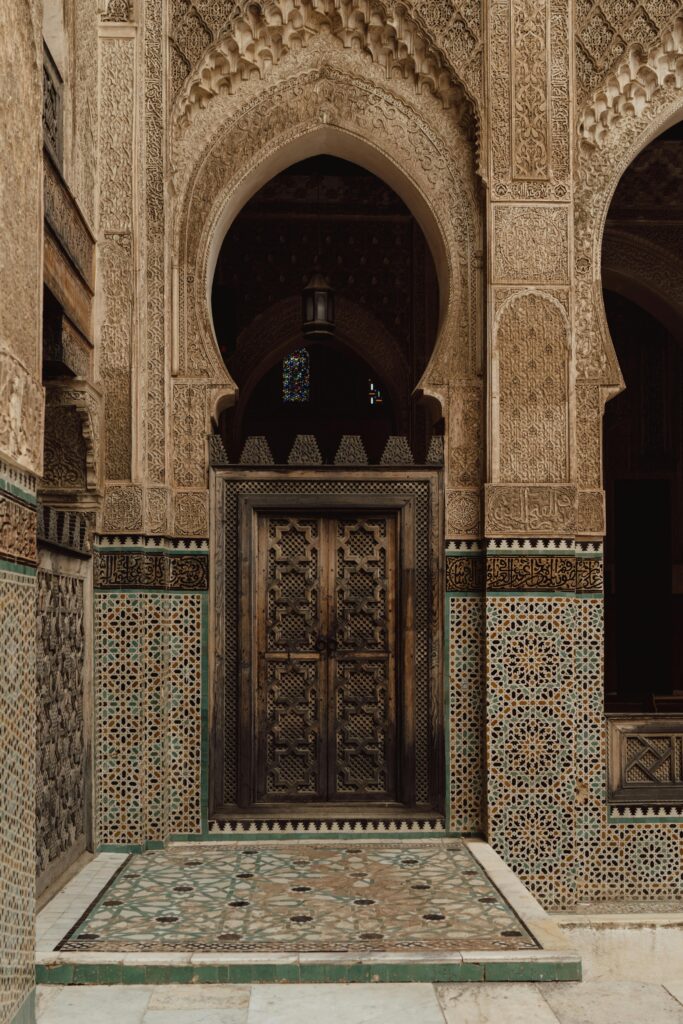
Used in riads and hammams for centuries, Tadelakt is a lime-based plaster that’s naturally waterproof and breathable — perfect for Moroccan heat and humidity.
Why it works:
Ideal for bathrooms, spas, and pools
Elegant matte texture with a traditional Moroccan feel
Mold-resistant and eco-friendly
Zellige Tiles: Craft Meets Climate Control
Zellige, the hand-cut glazed tile, isn’t just decorative — it keeps interiors cool during Morocco’s scorching summers.
Ideal for:
Hotel lobbies
Courtyards
Restaurant walls and floors
These tiles reflect light and heat, and bring a luxurious, handmade touch to any hotel design Morocco.
Rammed Earth (Pisé): The Eco-Friendly Wall Solution
This ancient technique involves compacting layers of earth to form thick, natural walls. Common in traditional riad construction, it’s now gaining popularity in sustainable hotel projects.
Benefits:
Natural insulation (warm in winter, cool in summer)
Low environmental impact
Visually stunning with raw, earthy texture
Cedar Wood: Beauty, Strength & Resistance
Cedar is a premium Moroccan wood known for its pleasant aroma and resistance to humidity and insects.
Best for:
Custom furniture
Shutters and ceilings
Decorative lattice (moucharabieh)
Its reddish tone adds warmth and character to modern and traditional hotel interiors.
Terracotta and Clay: Breathable & Stylish
Used for centuries in Moroccan construction, clay bricks and terracotta tiles allow buildings to “breathe,” reducing the risk of moisture damage.
Use in:
Roof tiles
Outdoor paving
Floor tiles for patios and lounges
They are cost-effective and naturally regulate indoor temperature — key for climate-adaptive hotel design Morocco.
Stone & Marble: Cooling Natural Materials
Moroccan hotels often use local stone (like Atlas mountain limestone) and marble for:
Reception areas
Guest bathrooms
Outdoor facades
Stone retains coolness — ideal for desert and hot city environments — while adding timeless elegance.
How These Materials Support Riad Construction and Sustainability
Many of the materials listed above align with traditional riad construction principles: thick walls, natural cooling, and intricate design details. By blending old techniques with modern engineering, hoteliers can:
Improve energy efficiency
Lower long-term maintenance costs
Meet green building certifications (like EDGE or LEED)
Final Thoughts: Build with Culture, Climate & Comfort in Mind
Whether you’re building a boutique hotel in Essaouira or renovating a riad in Fes, choosing the right Morocco building materials is more than just a design decision — it’s a commitment to longevity, sustainability, and an unforgettable guest experience.
Hotel design Morocco is most successful when it embraces heritage, adapts to the environment, and creates comfort through thoughtful construction choices.
Ready to Start Your Project?
If you need help sourcing Moroccan artisans, sustainable materials, or local architects, I can help you build a vendor list or connect you with turnkey hotel renovation experts.
Hotel Interiors: Enhancing Guest Experience with Custom Furnishing
In today’s competitive hospitality landscape, hotel success goes beyond location or amenities. What truly sets one property apart from another is the interior design — and more specifically, the use of custom furniture to create one-of-a-kind experiences for guests.
Personalized hotel interiors have become essential for boutique hotels, riads, and luxury stays across Morocco and beyond. Let’s explore how custom furnishing plays a vital role in elevating guest satisfaction.
Why Custom Furniture Matters in Hotel Interiors
Every guestroom tells a story. And with custom furniture, you get to control that narrative — from the materials to the message.
Here’s why it matters:
✨ Uniqueness: Avoid the “copy-paste” look of chain hotels
🪑 Tailored Fit: Maximize every inch of space, especially in historic riads or compact urban hotels
🎨 Local Identity: Use Moroccan materials like cedar wood, brass, or zellige to reflect culture
🧘 Comfort & Function: Guests notice thoughtful touches like ergonomic chairs or built-in luggage benches
Boosting Guest Experience Through Thoughtful Design
Great hotel interiors don’t just look good — they make guests feel good. Studies show that ambiance, comfort, and personal design touches all impact guest mood, reviews, and return rates.
Key areas where custom furnishing improves guest experience:
Beds & Headboards: Signature pieces designed for both style and sleep
Lobby & Lounge Furniture: Sets the first impression
Dining Areas: Bespoke seating improves aesthetics and guest flow
Outdoor Spaces: Custom lounges and shaded areas invite relaxation
Case Study: Custom Furnishing in a Marrakech Riad
A 6-room riad in Marrakech’s medina partnered with local artisans to create:
Hand-carved wooden wardrobes
Brass lighting fixtures inspired by Andalusian geometry
Built-in window seats with traditional Berber fabrics
Bathroom vanities made from reclaimed olive wood
The result? A 40% increase in bookings and dozens of 5-star reviews mentioning the “authentic design” and “stunning furniture.”
Designing for Brand Identity & Guest Connection
Custom hotel interiors allow your brand to shine through every detail. Whether you’re targeting wellness travelers, creatives, or eco-conscious guests, the right furnishings make a powerful impression.
Here’s how:
Wellness Hotels: Use natural materials like stone, bamboo, or organic fabrics
Business Hotels: Provide sleek, functional desks and ergonomic chairs
Eco-Retreats: Choose sustainable wood and handcrafted decor to reflect values
Challenges of Custom Furnishing — and How to Solve Them
Challenge
Solution
Higher upfront cost
Long-term ROI via durability and guest satisfaction
Sourcing reliable artisans
Partner with trusted local furniture workshops
Delivery delays
Plan production early in the design process
Style vs. Functionality balance
Hire a designer specializing in hotel interiors
Final Thoughts: The Value of Investing in Custom Hotel Interiors
Custom furnishing is not just décor — it’s strategy. It’s how you tell your story, create atmosphere, and leave guests with memories they’ll associate with comfort, elegance, and cultural richness.
In the world of hospitality, standing out means designing from the inside out.
Ready to Design a Signature Guest Experience?
Whether you’re planning a renovation or launching a new boutique property, I can help you create unique hotel interiors that impress and inspire. Need supplier recommendations or mood boards? Just let me know.
5 Signs It’s Time for a Hotel Upgrade or Riad Renovation
The hospitality industry is evolving fast, and what worked five years ago might be hurting your brand today. Whether you manage a sleek hotel in Casablanca or a traditional riad in Marrakech, knowing when to invest in a hotel upgrade is essential.
Below are five warning signs that your space needs attention — and why now is the right time to renovate.
Guest Reviews Mention Outdated Interiors
One of the most obvious signs? Your guests are telling you.
When reviews start mentioning “tired decor,” “old bathrooms,” or “needs renovation,” it’s time to act. Outdated design not only lowers ratings but discourages return visits.
Maintenance Costs Keep Climbing
If you’re constantly fixing plumbing, repainting walls, or replacing furniture, you’re patching over a bigger issue. Older buildings — especially traditional riads — often need structural upgrades, not just cosmetic ones.
Investing in a riadhotel upgrade can save you more in the long run by:
Improving energy efficiency
Preventing major failures
Increasing room rates with modern amenities
You’re Not Meeting Today’s Hospitality Standards
From keyless room access to high-speed Wi-Fi and air purification, today’s travelers expect comfort, tech, and cleanliness. If your hotel or riad isn’t up to modern hospitality standards, you’re likely losing bookings.
Upgrading your property helps you:
Stay competitive
Attract business and digital nomad travelers
Comply with evolving health and safety protocols
Your Competitors Have Upgraded — and You Haven’t
Enhanced lighting
Better soundproofing
New communal areas (lounges, rooftop bars, co-working zones)
If nearby properties have modernized and your space feels left behind, you’re giving potential guests a reason to choose them instead.
Bonus Tip: When to Renovate a Riad Specifically
Riad renovations require special care. You’ll want to:
Preserve historical elements like zellige tiles and carved woodwork
Improve lighting in enclosed courtyards
Add climate control without altering traditional architecture
Partner with professionals experienced in heritage buildings to balance old and new.
Conclusion: A Hotel Upgrade Is an Investment in Experience
If any of these signs sound familiar, it’s time to seriously consider a hotel upgrade. Whether you’re running a beach hotel in Agadir or a riad in Fes, modernizing your property will:
Hotel Renovation Morocco: Guesthouse Makeover Success Stories
Renovating a guesthouse is more than an upgrade — it’s a transformation that requires vision, planning, and cultural sensitivity. Across the country, hotel renovation in Morocco has become a growing trend as property owners breathe new life into tired spaces and outdated interiors. Through smart design and the use of traditional Moroccan elements, many guesthouses are being turned into sought-after boutique stays.
From Faded to Fabulous: A Marrakech Riad Makeover
Before:
This riad in Marrakech’s medina was beautiful but outdated. The owners faced low occupancy, poor lighting, and worn-out finishes.
After:
Through a full guesthouse makeover, they introduced:
Tadelakt walls in neutral tones
Custom zellige tile flooring
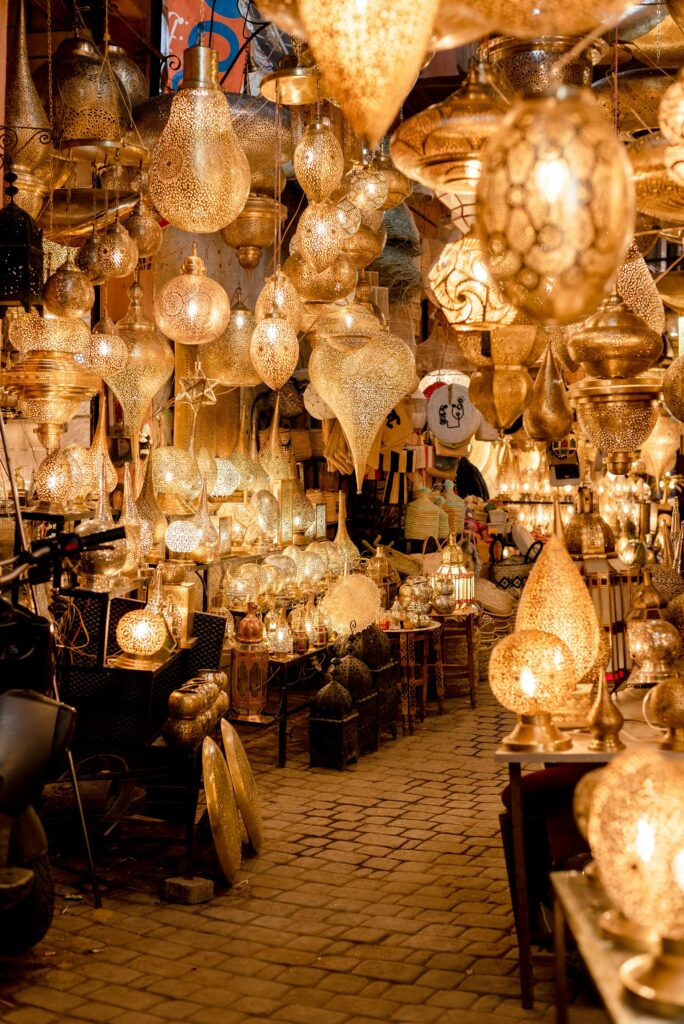
Handmade lanterns for soft lighting
Improved courtyard layout for guest flow
Occupancy jumped from 30% to 75% in just 6 months.
Coastal Charm: Essaouira Guesthouse Revival
Before:
A dull, concrete guesthouse near the coast lacked character and local flair. The goal was to attract surfers and creatives.
After:
The owners embraced Moroccan coastal design, including:
Blue-white theme inspired by Essaouira’s port
Locally sourced thuya wood furniture
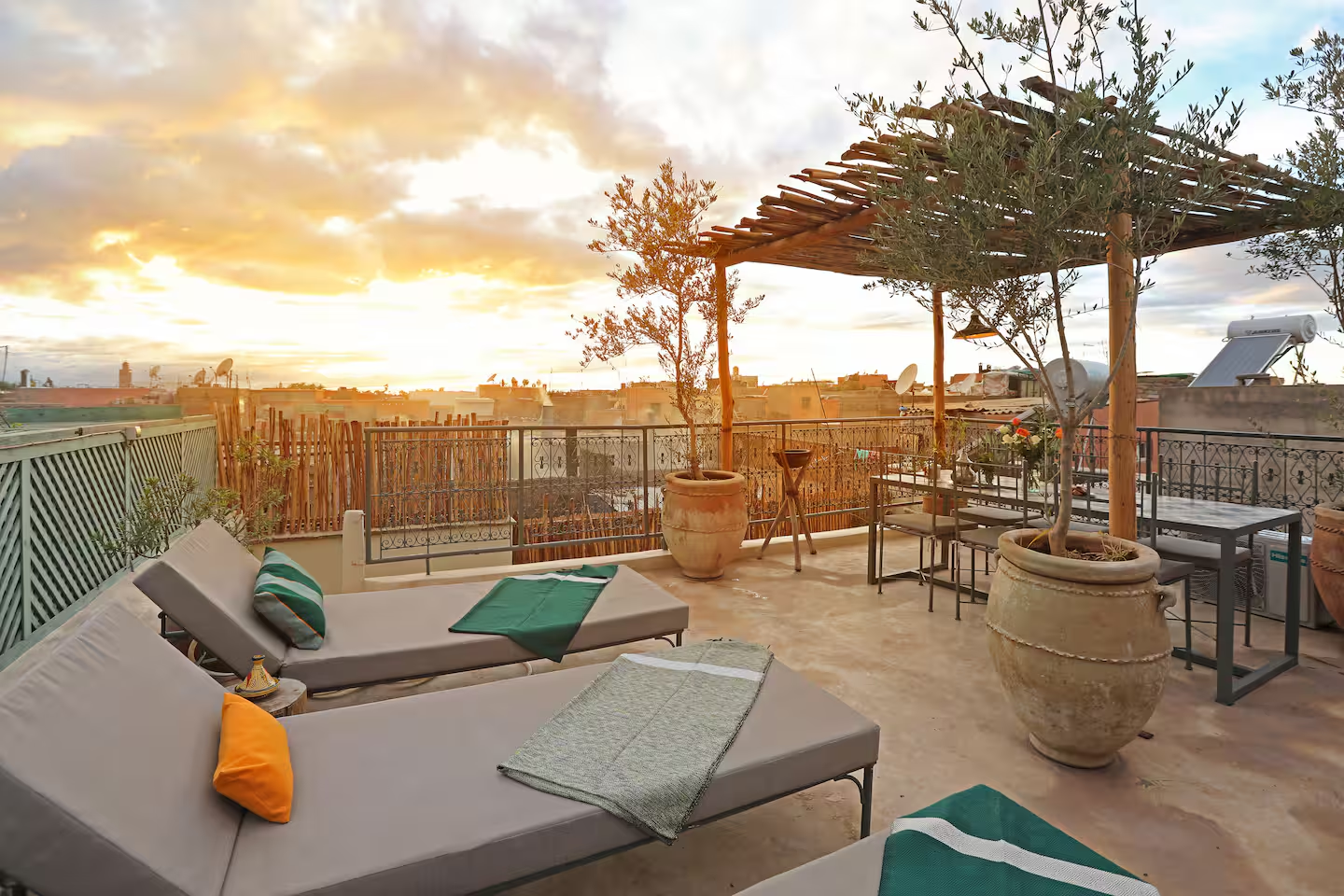
Built-in reading nooks and rooftop terrace redesign
Eco-friendly upgrades including solar lighting
The guesthouse was featured in a regional travel magazine and bookings tripled.
Desert Luxury: Zagora Guesthouse Goes Premium
Before:
This simple structure in the Sahara town of Zagora had basic rooms and no distinct identity. It was mostly used by backpackers.
After:
A high-end hotel renovation Morocco strategy turned it into a premium desert lodge:
Private suites with Berber textile walls
Clay walls mixed with modern copper fixtures
Poolside lounge with panoramic sand dune views
Hammam and traditional spa integration
Revenue increased by 180% in one year.
🏜️ Tip: Always blend tradition with modern comfort in Moroccan renovations.
Urban Oasis: Fez Guesthouse Modernization
Before:
This guesthouse had good bones but lacked flow and privacy. Noise and small rooms affected guest reviews.
After:
Strategic changes included:
Soundproofing walls with local stone
Opening up spaces with arched entries
Repurposing one room into a coworking-friendly lounge
New smart locks and energy-efficient lighting
Guests loved the mix of heritage and digital amenities.
What We Learn From These Success Stories
Each guesthouse makeover in Morocco teaches something vital:
Local materials = long-term authenticity
Smart design upgrades increase ROI
A personalized concept wins more bookings
Conclusion: Hotel Renovation Morocco Is About Vision and Culture
These success stories prove that a well-executed hotel renovation in Morocco can turn a struggling space into a celebrated guest destination. Whether in the medina, desert, or seaside — guesthouse transformation starts with understanding your audience and honoring Moroccan design traditions.
Hotel Renovation Morocco: 7 Riad Mistakes to Avoid
Why Riad Renovation in Morocco Requires Special Care
Hotel renovation in Morocco, especially when working with historic riads, is not like renovating any ordinary building. Riads are cultural treasures — typically centuries-old homes with traditional Moroccan architecture centered around a courtyard.
But many owners, in their rush to modernize, make expensive and irreversible mistakes. If you’re planning a riad renovation, read these essential tips before you begin.
Ignoring Traditional Moroccan Architecture
One of the biggest mistakes is stripping away the architectural identity of a riad. Replacing carved wooden doors or traditional tiles with modern, generic materials can ruin its authenticity.
✅ Architecture Tip: Work with local artisans who understand Moroccan design principles like zellige tilework, tadelakt plaster, and mashrabiya screens.
Poor Ventilation and Natural Light Planning
Riads are built to stay cool in summer using natural air flow. Many modern renovations block this by adding glass walls, drop ceilings, or sealed-off courtyards — resulting in higher energy costs and lower guest comfort.
Overlooking Legal Permits and Local Guidelines
Renovating a historical property in Morocco often requires special permits, especially in heritage zones like Marrakech medina or Fez. Skipping this step can lead to fines or even forced demolition.
🧾 Architecture Tip: Consult your local urbanisme office or hire a Moroccan architect familiar with riad laws.
Using Incompatible Modern Materials
Modern construction materials may react badly with ancient structures. For example, reinforced concrete can trap moisture in old walls, causing them to crack or decay.
🔧 Architecture Tip: Use traditional building methods (e.g., lime-based mortar) to maintain structural integrity.
Skipping Guest Experience Design in Renovation
Many owners focus too much on structure and too little on the guest experience. Rooms without good acoustic insulation, poor lighting, or awkward layouts can hurt reviews — even if they look beautiful.
Neglecting Accessibility and Safety Codes
Old riads often have steep stairs, narrow doorways, and low lighting — charming, yes, but risky. During your hotel renovation in Morocco, ensure your property meets modern safety and accessibility standards without losing its character.
📏 Tip: Add soft lighting along stairs and install discreet handrails.
Underestimating the Cost of Quality Riad Renovation
Renovating a riad isn’t cheap — and cutting corners almost always backfires. Cheap plumbing, low-grade finishes, or unskilled labor can damage your investment long-term.
💰 Tip: Budget at least 30% extra for traditional restoration techniques and artisan labor.
Final Thoughts: Smart Hotel Renovation in Morocco Starts with Respect
Every riad tells a story — don’t silence it during renovation. Preserving tradition while embracing comfort is the key to successful hotel renovation in Morocco.
By avoiding these 7 common mistakes, you’ll ensure your riad becomes not only a beautiful space but also a profitable and culturally respectful hospitality asset.
Hotel Renovation Ideas: Moroccan Interior Design Trends for 2025
Why Interior Design Matters in Hotel Renovation
In today’s competitive hospitality market, hotel renovation is no longer just about repainting walls or replacing furniture — it’s about creating a memorable guest experience. And in Morocco, where tradition meets modernity, Moroccan design is taking center stage in the interior trends for 2025.
Whether you’re refreshing a boutique riad or modernizing a luxury resort, these design insights will help you upgrade your space with purpose and style.
Earthy Tones and Desert-Inspired Palettes
One of the biggest interior trends for 2025 is the return to nature. Moroccan interiors are shifting from vibrant jewel tones to warm, earthy hues like terracotta, sand, olive, and burnt orange — evoking the Atlas Mountains and the Sahara.
🌿 Tip for hotel renovation: Use textured paints or tadelakt (a traditional Moroccan plaster) for walls to create a soft, organic feel.
Handcrafted Zellige Tiles: A Timeless Moroccan Touch
Zellige tiles, with their intricate geometric patterns, are back in a big way — but with a twist. In 2025, designers are blending traditional layouts with minimalist patterns and neutral colors for a contemporary yet authentic vibe.
🏨 Perfect for hotel lobbies, spa areas, or accent walls.
Sustainability and Local Craftsmanship
A major driver in modern hotel renovation is sustainability. In Morocco, this means using local materials like thuya wood, natural clay, palm leaves, and wool. Guests increasingly value authenticity and eco-consciousness.
Riads Reimagined: Courtyard-Focused Layouts
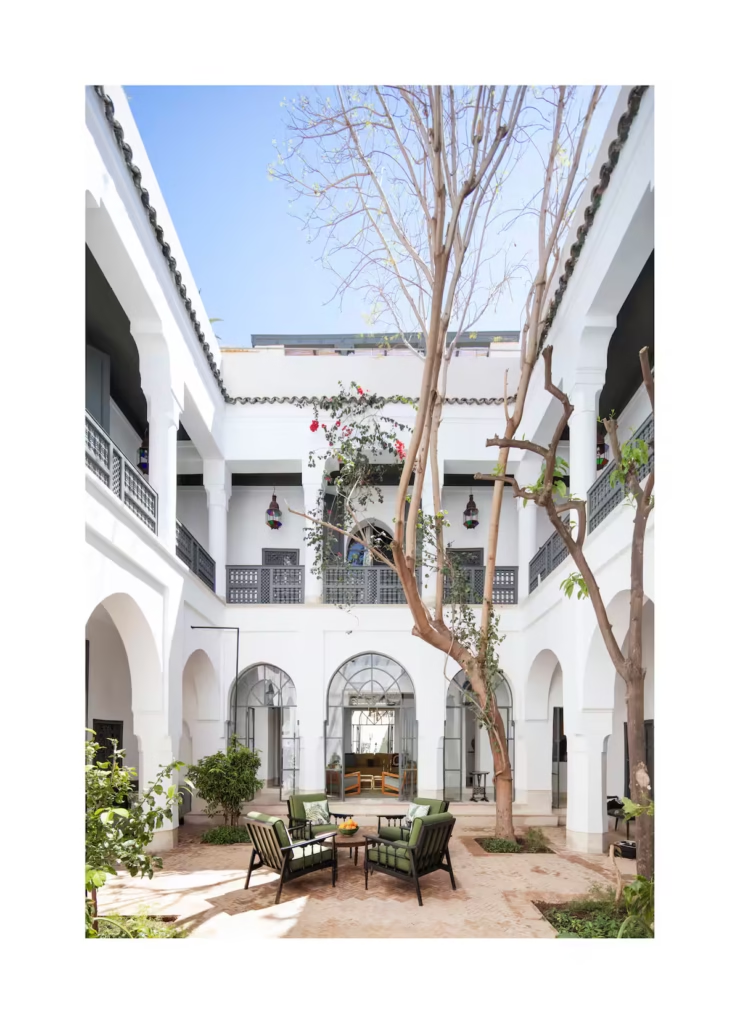
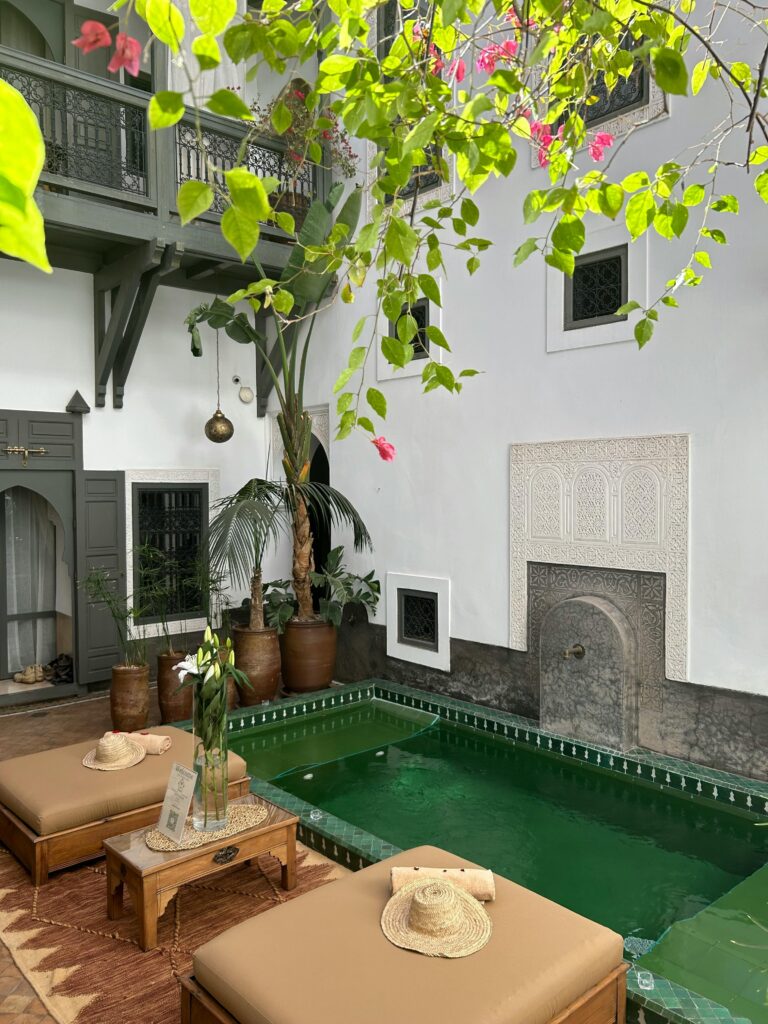
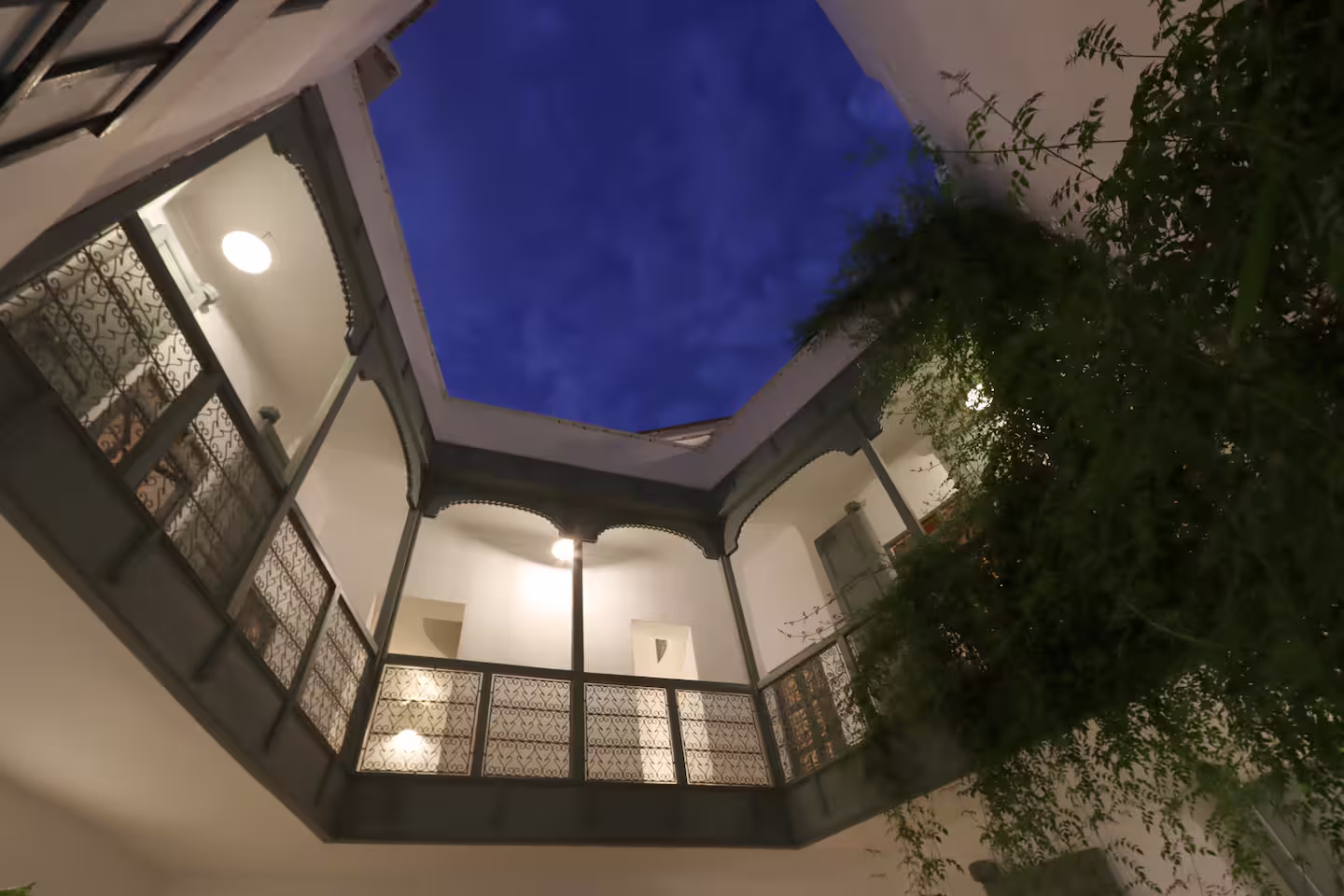
Traditional Moroccan design is built around open-air courtyards. In 2025, this concept is being modernized with glass ceilings, vertical gardens, and water features — merging indoor and outdoor environments.
🌺 Bonus tip: Add locally made lanterns or ironwork to elevate your central space.
Mixing Textures: From Berber Rugs to Modern Steel
Moroccan interiors thrive on texture layering. Think: hand-woven Berber rugs, carved wood, polished stone, and raw linen. 2025 is about contrast — blending ancient techniques with industrial details like matte black fixtures or brushed brass.
Smart Features in Traditional Settings
As digital expectations rise, modern hotel renovations in Morocco are balancing smart technology with cultural charm. Keyless entry, room automation, and smart lighting are now integrated subtly within traditional architecture.
💡 Smart without losing soul. Combine tech with hand-carved mashrabiya wood panels or hidden charging stations in antique desks.
Statement Lighting with a Moroccan Flair
Lighting is a key design focus in 2025. Expect dramatic pendant lights, handmade brass lanterns, and arched sconces to dominate Moroccan hotel interiors — offering both ambiance and artisan appeal.
Personalized Guest Spaces and Boutique-Style Rooms
Moroccan hotels are shifting toward individualized guest experiences. That means creating unique room themes using varied color palettes, artisanal décor, and custom headboards — a powerful renovation trend for guest satisfaction.
Conclusion: Moroccan Design Is Leading the Future of Hotel Renovation
The interior trends of 2025 reveal a deeper appreciation for authentic Moroccan design, sustainability, and guest personalization. If you’re planning a hotel renovation, blending modern features with traditional charm isn’t just stylish — it’s strategic.
Ready to redesign your space? Moroccan interiors are timeless, adaptable, and unforgettable — everything your guests want in 2025.
Turnkey Construction in Morocco: Why It’s the Smart Choice for Hotel Owners
In the vibrant world of property development, Morocco is fast becoming a hotspot, especially for investors in the hospitality sector. For hotel owners, the demand for streamlined, efficient building solutions has led to a growing trend: turnkey construction. But what exactly is it, and why is it the smartest decision hotel developers can make?
What Is Turnkey Construction?
Turnkey construction refers to a building solution where the contractor handles every aspect of the project — from architectural design and permits to construction and final delivery. Once completed, the property is ready for immediate use, hence the term “turnkey”.
For Morocco hotels, this method offers a stress-free alternative to the traditional building approach, reducing the number of vendors and decisions needed throughout the process.
Why Choose Turnkey Construction in Morocco?
✅ Time & Cost Efficiency
Morocco’s property laws and building codes can be complex for foreign investors or first-time developers. With turnkey construction, everything is handled under one contract, reducing delays, miscommunication, and hidden costs.
✅ Single Point of Contact
You won’t have to manage multiple suppliers, architects, or contractors. This centralized communication is especially beneficial in large-scale property development like hotels.
✅ Local Expertise
Partnering with local firms that specialize in turnkey construction ensures you’re complying with Moroccan building regulations, cultural aesthetics, and sustainability goals.
.
Real Estate Trends: Morocco’s Growing Hotel Industry
The Moroccan government has heavily invested in tourism, aiming to welcome 17.5 million tourists by 2026. Cities like Marrakech, Agadir, and Tangier are witnessing a surge in hotel property development, with many investors opting for turnkey solutions to stay ahead.
Top Locations for Turnkey Hotel Development in Morocco
Marrakech – Known for its luxury tourism.
Agadir – Coastal city ideal for beach resorts.
Casablanca – Business tourism hotspot.
Tangier – Gateway to Europe, major investment zone.
Success Story: Turnkey Hotel in Marrakech
A boutique hotel project in Marrakech, completed in just 11 months using turnkey methods, is now fully operational and profitable. This case shows how turnkey construction can accelerate timelines and improve ROI in property development.
How to Start Your Turnkey Hotel Project in Morocco
Choose a Reputable Turnkey Contractor Look for experienced firms with a portfolio in Moroccan hospitality projects.
Define Your Budget and Timeline Work with professionals who offer transparent pricing.
Secure the Right Land or Building Consider proximity to tourist hubs and accessibility.
Stay Involved Without the Stress Monitor progress through regular reports without managing day-to-day operations.
🧭 For local property registration and building regulations, visit: Moroccan Investment and Export Development Agency (AMDIE)
Internal Resources for Further Reading:
👉 How to Invest in Moroccan Real Estate
👉 Understanding Morocco’s Hotel Classification System
👉 Best Cities for Hospitality Investment in North Africa
Conclusion: Turnkey Is the Future of Hotel Property Development in Morocco
In the competitive world of Morocco hotels, choosing turnkey construction is not just convenient — it’s smart. Whether you’re a local entrepreneur or an international investor, turnkey solutions minimize risk, cut costs, and bring your property development vision to life faster and more efficiently.
Ready to build your dream hotel in Morocco? It starts with a turnkey key.